
Many in the western press are oversimplifying the story about Venezuela, blaming its economic crisis more or less exclusively on the socialist policies of President Nicolas Maduro and his predecessor, the late Hugo Chavez. Government policy has contributed to the shape the crisis has taken, but there is a lot more going on than meets the eye. I want to try to tell a fuller story.
Tag: Saudi Arabia
The Islamic State is Weak and Pathetic, and I Have the Numbers to Prove It
In my conversations with people around the internet since the Paris terrorist attack, it’s become increasingly clear to me that many people have a dramatically inflated understanding of the military strength and capabilities of the so-called Islamic State. So today I’d like to make it clear just how weak these people are, and how easy it would be for the surrounding Muslim states to destroy this organization even if the United States played only a minor logistical role.
Continue reading “The Islamic State is Weak and Pathetic, and I Have the Numbers to Prove It”
Yemen: The American Catastrophe No One is Talking About
Everyone knows about what a mess Iraq and Syria are. Libya is still a disaster, but even that country once had our attention. This is a story about Yemen. Remember Yemen? It’s the box-like country on the southwest corner of the Arabian peninsula:
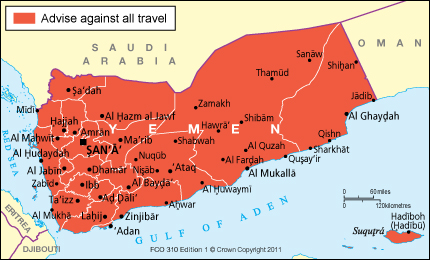
Yemen is in the grip of a civil war that has now killed over 4,300 people. It’s an omnishambles. Let me tell you the horrible story of how we turned this country into the war-torn dystopia it now most assuredly is.
Continue reading “Yemen: The American Catastrophe No One is Talking About”
Saudi Arabia under King Abdullah
King Abdullah’s reign in Saudi Arabia has come to an end with his death at age 90. Abdullah became king in 2005, but his rule truly began in 1996, when, as crown prince, he became King Fahd’s regent. Effectively, he was in power for nearly 20 years. It can often be difficult to judge the legacies of democratically elected leaders. Their short terms in office make it difficult to distinguish the effects of their administrations from those who precede and follow them. By contrast, autocratic rulers not only typically rule for far longer, but they also have much greater personal influence over the policies that emerge during their reigns. For these reasons, when a long-serving autocrat passes the torch, it is an interesting and useful exercise to have a look at how much better or worse off their country is now than it was when they rose to power. In March 2013, I ran a similar piece about Hugo Chavez’ 14-year reign. So let’s look at Abdullah’s legacy.
Great Power Graphapalooza
In the course of doing my MA at the University of Chicago, I’ve had the opportunity to take a class from John Mearsheimer. Mearsheimer is one of the most widely renowned structural realists in the international relations game today. He disagrees with much of US foreign policy since the end of the Cold War, lamenting the US’s decision to expend its energies maintaining large military presences in regions of the world that contain no threats to the United States. Mearsheimer calls for a strategy of offshore balancing, in which the United States only intervenes in critical regions in order to prevent those regions from being dominated completely by another state. Otherwise, he recommends the US save its strength. I found myself curious today about what many of the world’s region’s power relationships might look like if the United States were to withdraw militarily and allow the powers in those regions to engage in security competition with one another, and I have taken some time to run the figures and make a vast plethora of charts to share with you.
 Benjamin Studebaker