
There’s a story we tell about social media. Once upon a time politics wasn’t so divided and polarized. But then, social media came along–it let people retreat into bubbles, where they only talked to people who thought as they did. This caused them to get all extreme and nasty. And then the alt-right and the Russians figured out that they could inject fake stories into these bubbles and turn social media users into Trump supporters! Our beautiful liberal society was torn apart, and it’s all because people stopped trusting traditional news sources, like the big newspapers and TV networks. Companies like Facebook have a responsibility to do something about this–to call out the fake stories, or stop them from showing up in people’s feeds. Sounds familiar, right? I want to tell a different story about social media.
Tag: Liberalism
Corbyn, Stein, and the Left’s Anti-Imperialism Problem
If you ask the British people what they think about Labour Party leader Jeremy Corbyn’s policies, it’s clear that any skepticism they may have about his economic agenda is far surpassed by misgivings about his foreign policy:
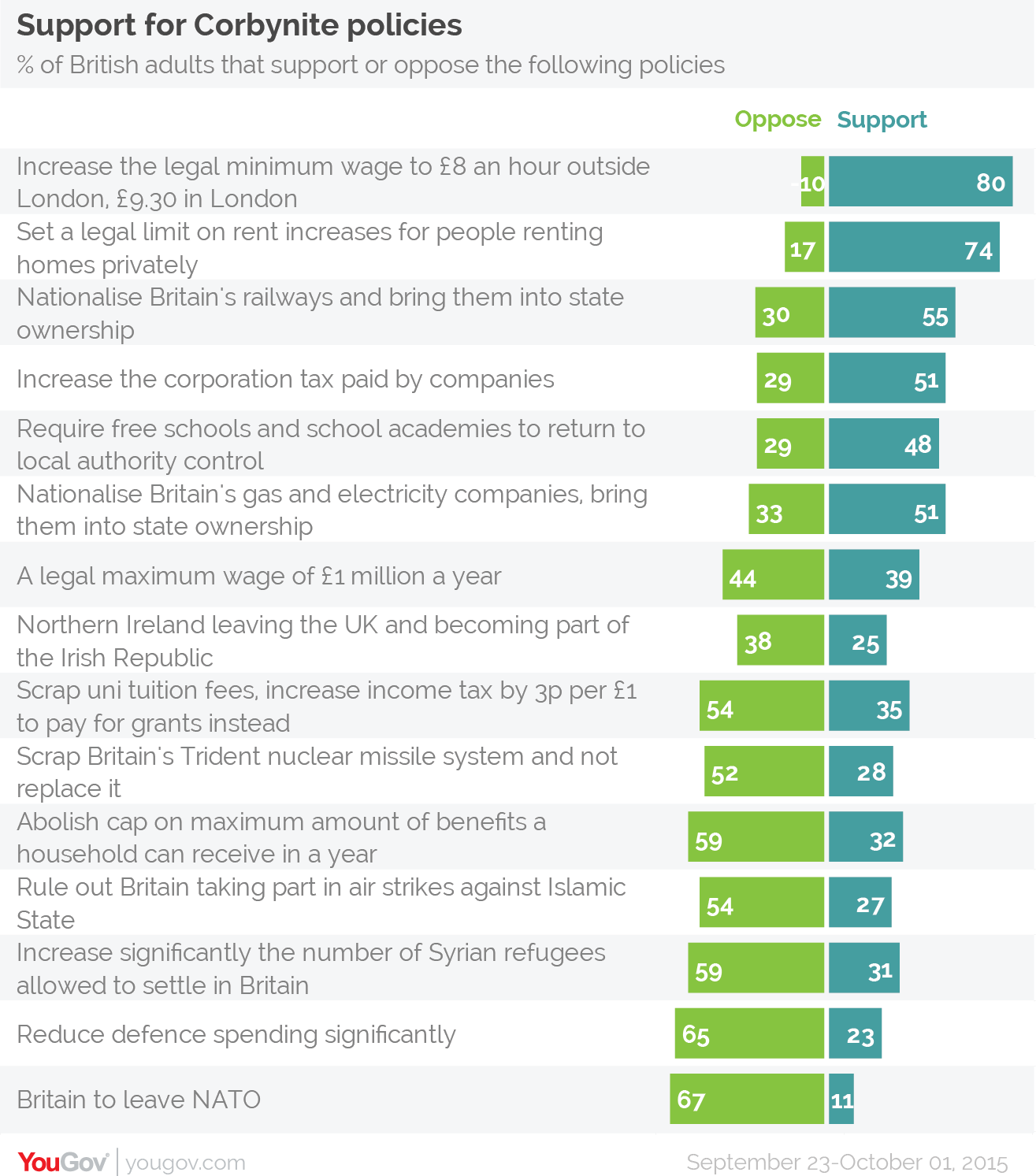
Since becoming Labour leader, Corbyn and his supporters have been accused of being “terrorist sympathizers” and anti-Semitic. This perception is tied to a suite of policy positions and attitudes which are best described as “anti-imperialist”. Left wing politicians and movements which embrace anti-imperialism face a set of political obstacles that they avoid if they jettison it. Today I’d like to think a little bit about how anti-imperialism works, both as a theory of international politics and in terms of its influence on the success and failure of the left in domestic politics.
Continue reading “Corbyn, Stein, and the Left’s Anti-Imperialism Problem”
The Case for a Coup in Turkey
In July Turkey experienced a failed military coup against the elected government of President Recep Tayyip Erdoğan, leader of the conservative Justice and Development Party (in Turkish, Adalet ve Kalkınma Partisi or AKP). The Turkish government blames the coup on Fethullah Gülen, a Turkish preacher living in exile in the United States whom the government regards as a terrorist. It is demanding his extradition, but the United States has to this point refused to comply without hard evidence connecting Gülen to the coup. In the meantime, the Turkish government has declared a state of emergency and begun suspending, imprisoning, or firing tens of thousands of political opponents, including 9,000 police officers, 21,000 private school teachers, 10,000 soldiers, nearly 3,000 judges, 1,500 university deans, and more than 100 media outlets have been forcibly shuttered. This political purge is an escalation of a pattern of behavior that existed before the coup. For a long time Erdoğan and the AKP have concentrated power, acting against the press and against Turkey’s civil society and eroding Turkey’s secular norms. Those who support Erdoğan tell a story in which an embattled democratically elected president is beset by a would-be junta, but the situation in Turkey is considerably more complicated than that, and there is a strong case that Turkey’s constitution is not up to the task of protecting Turkey’s political system from increasingly unlimited abuse.
Why Our Schools Don’t Work
One of the difficulties with writing about education is that by the time educational reformers manage to make their voices heard, they are too old. They have forgotten what it is like to be a young person in school, and the schools have changed so much during their own lifetimes that to the extent that they do remember, their memories are no longer relevant. One of the paradoxes of life is that at 22, I still remember a lot of experiences from school that remain relevant to the contemporary debate, but because I am 22, no one really pays attention to much of what I say. But I digress. Today it has occurred to me that the reason our schools do not work is that our society has three distinct purposes for its schools, and that these purposes contradict each other in fatal ways.
Bill Maher and Ben Affleck are Both Wrong about Islam
In recent days, there’s been much discussion of an episode of Real Time with Bill Maher in which Maher (the host) and noted atheist Sam Harris got into a lively discussion with actor Ben Affleck over whether or not Islam is fundamentally less compatible with liberal values than Christianity, Judaism, or other religions. While I see many people taking sides, I found none of the arguments made particularly persuasive. I was instead struck by how thoroughly all three men seemed to miss the point.
Continue reading “Bill Maher and Ben Affleck are Both Wrong about Islam”
 Benjamin Studebaker