Corbyn, Stein, and the Left’s Anti-Imperialism Problem

If you ask the British people what they think about Labour Party leader Jeremy Corbyn’s policies, it’s clear that any skepticism they may have about his economic agenda is far surpassed by misgivings about his foreign policy:
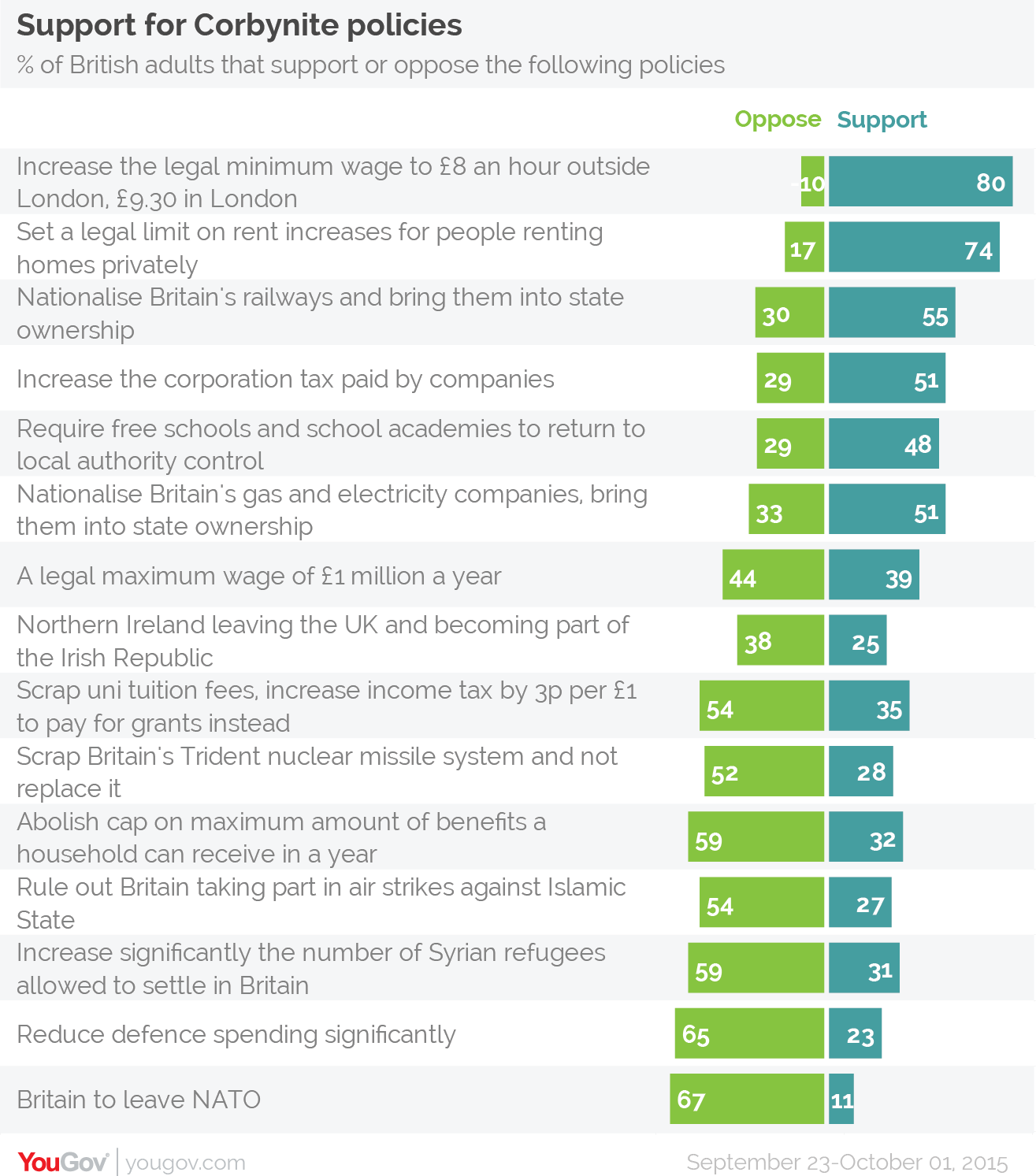
Since becoming Labour leader, Corbyn and his supporters have been accused of being “terrorist sympathizers” and anti-Semitic. This perception is tied to a suite of policy positions and attitudes which are best described as “anti-imperialist”. Left wing politicians and movements which embrace anti-imperialism face a set of political obstacles that they avoid if they jettison it. Today I’d like to think a little bit about how anti-imperialism works, both as a theory of international politics and in terms of its influence on the success and failure of the left in domestic politics.

Continue reading “Corbyn, Stein, and the Left’s Anti-Imperialism Problem”

A Hierarchy of Lies and Falsehood

The 2016 election has been full of lies and falsehood. Candidates routinely say things that are not true or make misleading and fallacious arguments. But not all lies are equal–some are more damaging than others, some may even appear justifiable. So today I’d like to break down the different kinds of lies in politics and think about which ones are the most objectionable. To spice things up, we’ll include examples from the campaign of each kind of lie. Are you ready? Let’s go.

Continue reading “A Hierarchy of Lies and Falsehood”

The Limitations of Proportional Representation

About 23% of Americans don’t like both Trump and Clinton. Many of these people are considering third parties, or would like to be considering them but don’t feel they can safely do so because of the American voting system, which makes it very difficult for third parties to win and ensures that people who vote third party get no say in the choice between the two major party nominees. Some people have talked about wanting to switch to proportional representation (PR) to break the stranglehold of the two parties on politics. Under PR, if 8% of the population votes for a Green or a Libertarian, 8% of the legislature is comprised of Greens or Libertarians. If no party is able to put together a majority of votes, parties have to cooperate in coalitions to get things done. PR is in Jill Stein’s platform and some libertarians have expressed enthusiasm for it as well. PR cannot really be applied to the presidential race, because the president can only be one person–he or she cannot be 8% Green. But for presidential races we could employ a ranked ballot system allowing for an instant-runoff. On this system if you voted for Jill Stein your vote could be transferred to Clinton after Stein is eliminated. This may sound intriguing, but PR is not a magic bullet and it can produce some very bad situations that we should consider.

Continue reading “The Limitations of Proportional Representation”

The Left in Britain: Debating the Merits of Corbyn and Smith

The British Labour Party is having another leadership contest, just one year after current leader Jeremy Corbyn defeated three rivals, 59.5% of the vote. Corbyn’s opponents have rallied behind a single challenger, Owen Smith. Smith’s supporters claim that Labour cannot win an election under Corbyn while Corbyn’s supporters claim that Smith is a Trojan horse for a Tory-lite party establishment. As the campaign has unfolded, Corbyn has sought to reassure supporters that he has a credible electoral strategy while Smith has sought to persuade Labour voters that he is a strong advocate for the left. Who is right and what is going on? Let’s have a think.

Continue reading “The Left in Britain: Debating the Merits of Corbyn and Smith”

Trident: How Important is an Independent Nuclear Deterrent?

Britain’s leader of the opposition, Jeremy Corbyn, has declared his opposition to the use and possession of nuclear weapons:

Specifically, he wants to discontinue Britain’s Trident nuclear program. Trident consists of four submarines, 58 Trident II D-5 ballistic missiles, and 160 thermonuclear warheads. All together, Britain has the 5th largest nuclear program in the world:

How important is this program to Britain’s security? On this issue, I think both Corbyn and his critics have oversimplified matters a bit. The role nuclear weapons play is more complicated than both hawks and doves typically acknowledge.

Continue reading “Trident: How Important is an Independent Nuclear Deterrent?”