Nord Stream Deflections

A journalist has alleged that the United States sabotaged the Nord Stream pipelines. The United States has suggested that Russia blew up the pipeline, but it has not provided evidence to substantiate this claim. The attack on the pipeline makes it much harder for the European Union to import gas from Russia, making the EU more dependent on expensive liquified natural gas from North America. By removing the prospect of resuming Russian gas imports in the near-term, the attack on the pipeline gives the EU less reason to seek a swift end to the war in Ukraine. It diminishes Russian leverage. The American narrative – that Russia destroyed the pipeline to deny Europe gas – doesn’t make a lot of sense. Russia controls the tap. It can turn the gas on and off as it pleases. The sabotage destroys Russia’s capacity to turn the gas back on, and therefore it takes away Russia’s diplomatic option to offer to turn the gas back on as part of a settlement.

Given these facts and the absence of conclusive evidence as to who is responsible for the attack, it is reasonable to question the US government’s narrative and to demand the US government provide evidence to support its account of what happened. The journalist is just one of many people who have asked questions about Nord Stream. But a funny thing has happened. Instead of discussing the issues at hand – the pipeline, the energy crisis, the war – media outlets are increasingly focused on the journalist’s character. He’s accused of being a crank, a conspiracy theorist, a crazy person. Those who think it’s important to question the US government’s narrative have increasingly become preoccupied with defending the journalist. Many people now know the journalist’s name and can tell you all sorts of things about the journalist’s career. But what does this have to do with anything?

Continue reading “Nord Stream Deflections”
How the War in Ukraine Ends

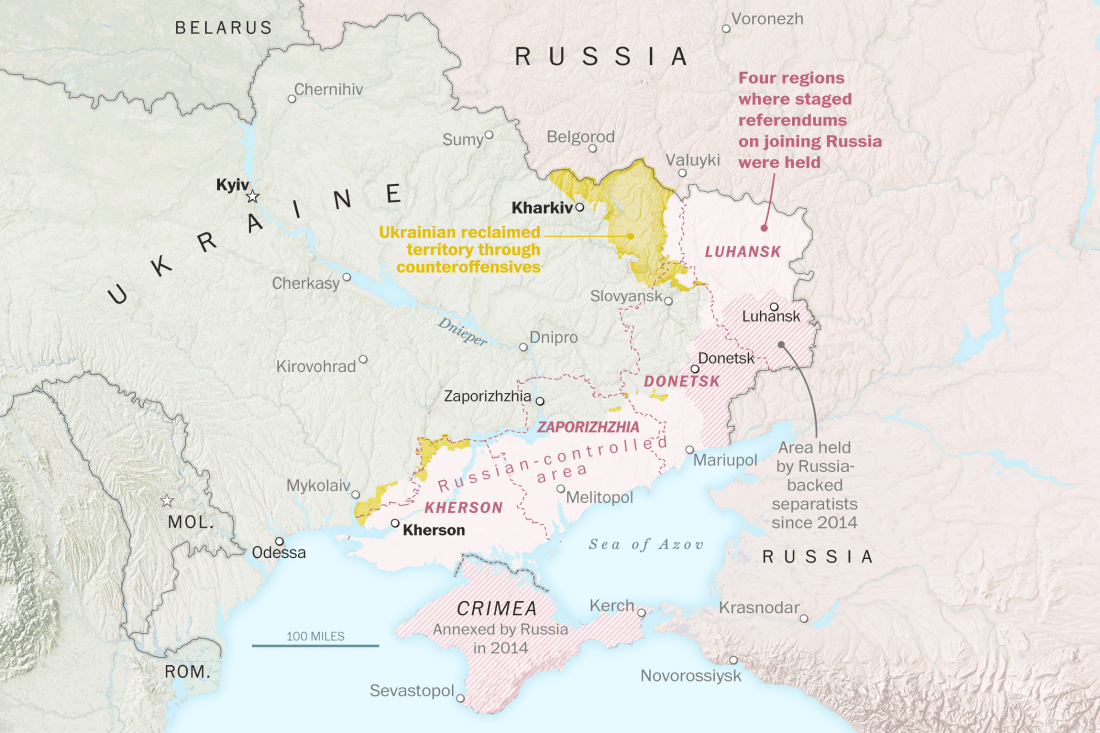
Russia has moved ahead with annexing the occupied oblasts of Ukraine. This is a point of no return for the Putin regime. It is hard for the regime to maintain its legitimacy when it is trying and failing to invade a foreign country. The regime looks weak and incompetent, and with no real possibility of replacing the leadership through an election, there is no easy to way to restore confidence on short notice. But as difficult as that situation is, it is much harder for the regime to maintain its legitimacy when it is trying and failing to defend the territory the regime acknowledges as part of Russia. A Russian president who cannot successfully invade Ukraine is weak. A Russian president who cannot defend Russia is pathetic. The decision to annex the oblasts therefore sends a clear message–the Putin regime will defend the territory it now holds, or it will die trying.

Continue reading “How the War in Ukraine Ends”

The Inflation Reduction Act is Not Designed to Reduce Inflation

As the midterms approach, the Biden administration is looking to pass some part of its Build Back Better plan. Biden managed to fund $550 billion in new traditional infrastructure spending. But the American Society of Civil Engineers argues that we have an infrastructure funding gap of $2.59 trillion. The bipartisan infrastructure bill barely makes a dent in that. The rest of the administration’s proposals have continually run aground. Various senators threaten to withdraw their support all too quickly, and this has caused the administration to water down its proposals over and over again. Now there is a new version of the human infrastructure bill, called the Inflation Reduction Act. This bill claims to raise over $700 billion in new revenue in an effort to fight inflation, reduce the deficit, and fund new investments in energy. It sounds like a significant achievement, but it’s not. Here’s why.

Continue reading “The Inflation Reduction Act is Not Designed to Reduce Inflation”

What’s Really Going on in Ukraine

Most of the people writing about the Ukraine crisis are too busy trying to prove that they are on the right side to give decent analysis of it. They are worried about appearing too friendly to either Russia or the United States, and their career concerns are crippling their ability to say anything useful. Let’s talk about what’s really going on.

Continue reading “What’s Really Going on in Ukraine”

Trump’s Crummy Coal Bargain

The Trump administration has decided to reverse Obama-era coal regulations, increasing carbon emissions by a factor of 12 over the next decade. We all know that the Trump administration doesn’t believe in climate change, but what’s remarkable about the administration’s decision is that it’s incredibly bad value for money even on its own terms.

Continue reading “Trump’s Crummy Coal Bargain”