Cruz vs Rubio: The Unfinished Business from the Republican Primary

After Mitt Romney lost in 2012, the Republican Party establishment decided it needed to expand its base and wrote a report to this effect. The plan was for the party to triangulate to some degree on immigration and social issues to win more votes from Hispanics and women, moderating its positions and principles to make itself more attractive to these demographic groups. As Jeb Bush flamed out, Marco Rubio became the poster boy of this new style of conservative politics. But the Republican anti-establishment never bought into this strategy. Led by Ted Cruz, they firmly believed that Romney lost because he failed to excite the Republican base and that the answer was for the party to nominate a “true conservative”. The 2016 Republican primary was all set to be a showdown between “reform conservatism” and the Cruz counterrevolution, but then Donald Trump showed up and made the whole thing about him and about the public’s growing economic frustration. It now looks increasingly likely (but far from certain) that Trump will lose by a significant margin. What effect will that have on this debate and the party’s prospects in 2020?

Continue reading “Cruz vs Rubio: The Unfinished Business from the Republican Primary”
Corbyn, Stein, and the Left’s Anti-Imperialism Problem

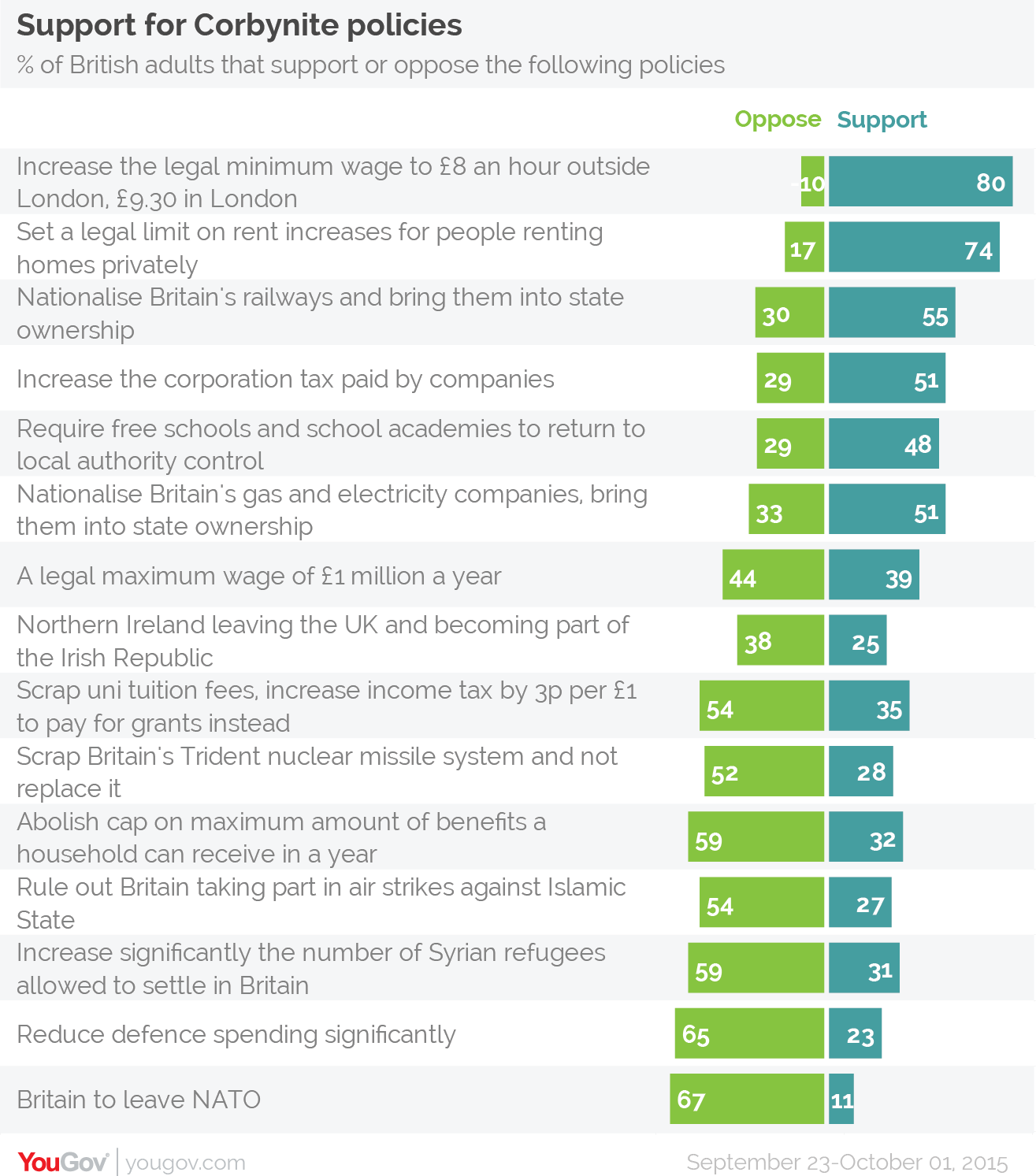
If you ask the British people what they think about Labour Party leader Jeremy Corbyn’s policies, it’s clear that any skepticism they may have about his economic agenda is far surpassed by misgivings about his foreign policy:

Since becoming Labour leader, Corbyn and his supporters have been accused of being “terrorist sympathizers” and anti-Semitic. This perception is tied to a suite of policy positions and attitudes which are best described as “anti-imperialist”. Left wing politicians and movements which embrace anti-imperialism face a set of political obstacles that they avoid if they jettison it. Today I’d like to think a little bit about how anti-imperialism works, both as a theory of international politics and in terms of its influence on the success and failure of the left in domestic politics.

Continue reading “Corbyn, Stein, and the Left’s Anti-Imperialism Problem”

A Hierarchy of Lies and Falsehood

The 2016 election has been full of lies and falsehood. Candidates routinely say things that are not true or make misleading and fallacious arguments. But not all lies are equal–some are more damaging than others, some may even appear justifiable. So today I’d like to break down the different kinds of lies in politics and think about which ones are the most objectionable. To spice things up, we’ll include examples from the campaign of each kind of lie. Are you ready? Let’s go.

Continue reading “A Hierarchy of Lies and Falsehood”

The American Healthcare System is the Least Efficient By Far

During the 2nd presidential debate, Donald Trump accused Hillary Clinton of wanting single payer:

She wants to go to a single-payer plan, which would be a disaster. Somewhat similar to Canada. And if you ever noticed the Canadians–when they need a big operation when something happens, they come into the United States in many cases because their system is so slow, it’s catastrophic in certain ways. But, she wants to go to single payer which means the government basically rules everything.

As a matter of fact this is not Clinton’s position–she has advocated for a public option but not a wholesale replacement of the private sector healthcare system. During the primary she attacked Bernie Sanders’ single payer plan as politically unfeasible:

People who have health emergencies can’t wait for us to have a theoretical debate about some better idea that will never, ever come to pass.

Amusingly, Donald Trump has expressed support for single payer in the past:

The Canadian plan also helps Canadians live longer and healthier than America. … We need, as a nation, to reexamine the single-payer plan, as many individual states are doing.

So today I thought it would be fun to take a closer look at the numbers on healthcare than I’ve done before and look at whether our system is any good at helping people live longer for less money.

Continue reading “The American Healthcare System is the Least Efficient By Far”

Pence Gave Away Trump’s Biggest Policy Advantage and Kaine Didn’t Even Notice

The Vice Presidential debate last night between Tim Kaine and Mike Pence was a sad affair–Pence was able to “win” the debate without knowing any policy by repeatedly attacking Clinton’s record while only vaguely referencing policy issues. Rather than force Pence to defend his vague policy assertions, Kaine relied on a variety of canned talking points, many of which were personal attacks on Trump that moved the conversation away from the issues (Kaine repeatedly referenced my 5 bad anti-Trump arguments instead of my 5 good ones). This made Kaine look like he was running from policy, allowing Pence’s assertions to go unchallenged and giving Pence command of the room. Pence was able to accuse Kaine of running an insult-driven campaign, and Kaine’s response to that was to petulantly interrupt, get defensive, and resort to more insult-driven talking points, all of which reinforced Pence’s point. There were many claims Pence made that were open to attack, but I want to focus on one in particular today–Pence eliminated the major policy difference between his campaign’s and Kaine’s on Syria, and in so doing he eliminated the foreign policy case for Trump.

Continue reading “Pence Gave Away Trump’s Biggest Policy Advantage and Kaine Didn’t Even Notice”