
The penultimate piece in my series on supranational federalism for the Streit Council is out. There’s no paywall. You can read it here:
https://www.streitcouncil.org/post/why-federalism-on-the-role-of-china

The penultimate piece in my series on supranational federalism for the Streit Council is out. There’s no paywall. You can read it here:
https://www.streitcouncil.org/post/why-federalism-on-the-role-of-china
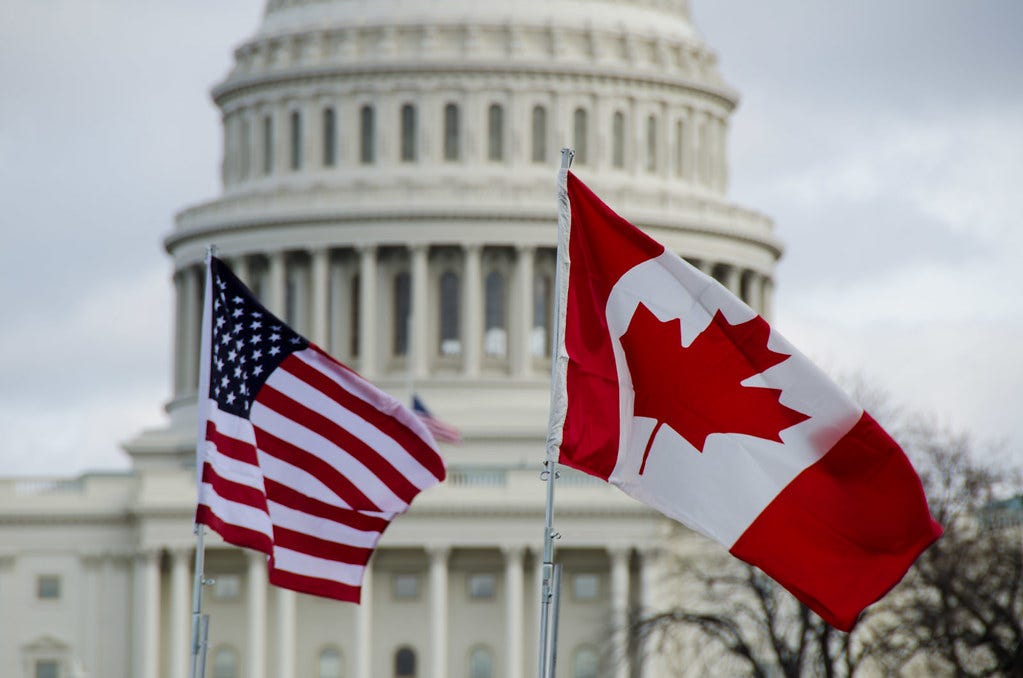
President Trump has announced new tariffs:
These tariffs are much larger than the tariffs Trump imposed during his first term. Those tariffs were targeted – they affected specific industries Trump was hoping to reshore. This is a broad-spectrum approach. It’s a strategy you use to force another state to make concessions in other policy areas. What is Trump trying to do? And will he succeed?
I’ve written the first in a series of six posts that will be coming out with the Streit Council, on the problem of economic integration without political integration. There’s no paywall. You can read it here:
https://www.streitcouncil.org/post/why-federalism-the-problem-that-needs-to-be-solved

I’ve been reading Youngmin Kim’s A History of Chinese Political Thought. In one of his chapters, he argues that during the Southern Song Dynasty (1127-1279), a peculiar kind of “metaphysical republicanism” took root. As the Chinese population increased, the Song state struggled to create enough jobs in the state bureaucracy to accommodate larger and larger numbers of educated young men. Unable to pursue political power through the conventional pathways, these young men invented a new kind of political theory to make sense of their positions (or lack thereof). Kim’s description of this theory is eerily reminiscent of the kind of thinking that has become increasingly popular among what I like to call the “fallen” professionals–people with university degrees who have been unable to secure stable, prestigious positions within the power structure.
Continue reading “Are Declassed Professionals in the United States like Surplus Song Dynasty Civil Servants?”I have a new piece out at New Republic on the president’s tariffs. You can read it here:
https://newrepublic.com/article/154852/real-stakes-trumps-trade-war-china
They have edited it to sync up with their preferred style, so it reads a bit differently from the rest of my work.
 Benjamin Studebaker